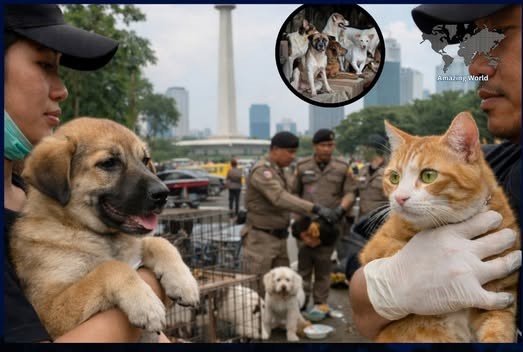
In a landmark victory for animal welfare and public health, Jakarta—Indonesia’s bustling capital and one of the world’s most populous cities—has officially implemented a comprehensive ban on the trade, sale, slaughter, and consumption of dog and cat meat, along with meat from other rabies-transmitting animals such as bats, monkeys, and civets.The prohibition, enacted through Gubernatorial Regulation No. 36/2025 (also known as Jakarta Regulation No. 36 of 2025), took effect on November 24, 2025, following its signing by Jakarta Governor Pramono Anung.
The measure prohibits dealing in these animals whether live, as carcasses, raw meat, or processed products, directly addressing both the cruel practices involved in the dog and cat meat trade and the serious zoonotic disease risks, particularly rabies. The decision came amid reports of at least 25 rabies-related deaths in the region and followed years of advocacy highlighting how the trade undermines rabies control efforts, even in areas striving for rabies-free status.This bold policy shift was driven by persistent campaigns from local and international animal rights organizations, including the Dog Meat Free Indonesia (DMFI) coalition (with partners like FOUR PAWS and others), who documented horrific conditions in markets and slaughter sites, exposed the brutal transport and killing methods, and lobbied authorities to recognize dogs and cats as companion animals deserving protection rather than commodities.
Activists celebrated the ban as a historic breakthrough, noting that Jakarta—home to over 10 million residents in the city proper and more than 30 million in the greater metropolitan area—had become the 21st jurisdiction in Indonesia to outlaw the dog and cat meat trades, sending a powerful signal that could inspire similar moves in other provinces and cities.For animal lovers, welfare groups, and many residents, the regulation represents an emotional and moral milestone: it formally affirms that dogs and cats are beloved pets and family members, not food sources, and prioritizes their welfare alongside human safety. The ban aligns with broader global trends toward reducing animal cruelty, curbing zoonotic threats (rabies remains a deadly concern in parts of Indonesia), and evolving cultural attitudes in urban centers where companion animal ownership is rising.Enforcement falls to city authorities, including the civil police (Satpol PP), with penalties such as fines, license revocations, confiscations of animals or products, and potential business closures for violators. A six-month grace period was built in to allow vendors and sellers time to transition, with officials emphasizing the need for strict monitoring of traditional markets, street stalls, restaurants, and online sales to prevent illegal activity.
To support a smooth shift, experts and advocates recommend complementary measures: job retraining and alternative livelihood programs for former traders, widespread public education campaigns to shift perceptions and build community buy-in, veterinary support for stray or confiscated animals, and ongoing rabies vaccination drives.While some cultural pockets and traditionalists have expressed resistance—citing longstanding customs in certain communities where dog meat (known as “rintek wuuk” in parts of North Sulawesi or similar dishes elsewhere) holds historical or perceived culinary value—the ban has garnered widespread praise from animal rights advocates, international observers, and progressive Indonesians who view it as a progressive step for a modern, global city like Jakarta. If effectively implemented, this regulation could pave the way for stronger national legislation, including the long-discussed Animal Protection and Welfare Bill currently under parliamentary review, ultimately reducing animal suffering, enhancing public health, and fostering greater compassion across the archipelago. As one activist put it, “Jakarta’s decision isn’t just about banning meat—it’s about choosing kindness over cruelty and health over risk.”