You Won’t Believe What Wearing Socks to Bed Does to Your Sleep (Science Says It’s a Game-Changer!)

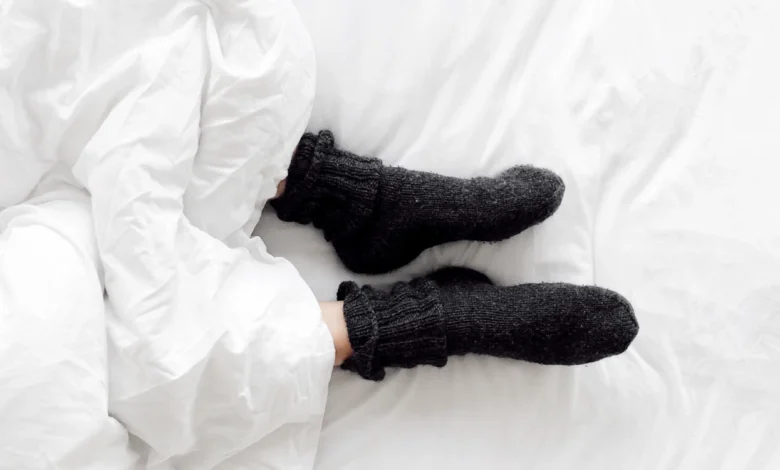
Wearing socks to bed might seem like a quirky habit, but science suggests it could genuinely help you drift off faster and enjoy better rest overall. The secret lies in how our bodies naturally prepare for sleep. As bedtime approaches, your core body temperature begins to drop slightly—this is a key physiological signal that cues the brain to release sleep-promoting hormones like melatonin and transition into rest mode.When your feet feel cold, the blood vessels in them constrict (a process called vasoconstriction), trapping heat in the body’s core and actually making it harder to achieve that essential core cooling. Putting on a pair of socks reverses this: the warmth causes the blood vessels near the skin of your feet to expand in a process known as vasodilation. This opens up the “radiators” in your extremities, allowing excess heat to radiate away from the core more efficiently. The result? Your core temperature drops just enough to align perfectly with your circadian rhythm’s sleep signal, making it easier to fall—and stay—asleep.
A notable small-scale study published in 2018 by researchers at Seoul National University (published in the Journal of Physiological Anthropology) tested this exact idea in a cool sleeping environment. Participants wore loose “bed socks” on some nights and went without on others. The findings were promising: when wearing socks, people fell asleep noticeably faster (shortened sleep onset latency), experienced significantly fewer awakenings during the night, enjoyed longer total sleep duration, and reported improved subjective sleep quality. These benefits were tied directly to enhanced thermoregulation—better heat redistribution from the core to the skin—and a stronger alignment with the body’s natural drop in core temperature.While the study involved a relatively small group and was conducted under specific cool-room conditions (relevant for many winter nights or air-conditioned bedrooms), the underlying mechanism has been supported by broader research on distal vasodilation and sleep onset. Other studies, including earlier work from Swiss researchers, have similarly shown that warm extremities are one of the strongest predictors of rapid sleep initiation.
Of course, results aren’t universal—individual factors like room temperature, personal circulation, whether you run hot or cold at night, or even the type of socks (loose, breathable cotton or wool is often ideal to avoid overheating) can influence outcomes. For those who frequently deal with cold feet, restless nights, or difficulty winding down, this ultra-simple, zero-cost trick is worth trying. Slip on a fresh, comfortable pair about 10–20 minutes before lights out, and you might just wake up feeling more refreshed. It’s one of those low-effort lifestyle tweaks backed by real physiology—no fancy gadgets required.