Uncategorized

Baldness Cure Incoming? UCLA’s PP405 Wakes Up Dead Follicles – Hair Grows Back in WEEKS!
.
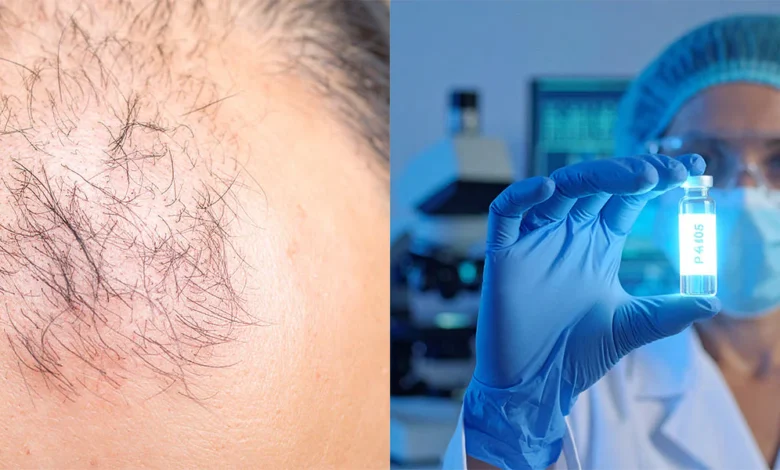
Researchers at the University of California, Los Angeles (UCLA) have made a significant breakthrough in hair loss treatment by discovering a small molecule known as PP405. This compound has shown the ability to awaken dormant hair follicle stem cells and kickstart the natural hair regeneration process in a way that differs markedly from existing therapies.PP405 functions by targeting and inhibiting the mitochondrial pyruvate carrier (MPC), a key protein that regulates metabolic pathways in hair follicle stem cells. When these cells remain in a quiescent (dormant) state, hair growth stalls. By blocking MPC, PP405 shifts the cells’ metabolism toward increased glycolysis, leading to a surge in lactate production. This lactate acts as a powerful signaling trigger that propels the follicles out of the resting (telogen) phase and into the active growth (anagen) phase, effectively reactivating the stem cells to produce new hair shafts.
This metabolic-focused mechanism stands in contrast to conventional hair loss treatments like minoxidil or finasteride, which primarily influence hormonal pathways (such as DHT reduction) or improve blood flow to follicles but do not directly address the underlying stem cell dormancy. PP405’s approach targets the root biological switch controlling follicle activity, potentially offering a more regenerative solution that could restore hair in areas previously considered permanently bald, provided the follicles themselves remain intact.In preclinical studies and early human trials (including Phase 1 and Phase 2a data released by Pelage Pharmaceuticals), topical application of PP405 demonstrated encouraging results. Participants applied the compound as a non-invasive gel directly to the scalp, with minimal systemic absorption due to its localized action—this design helps minimize potential side effects compared to oral medications. Early observations included statistically significant activation of hair follicle stem cells, measured by markers like increased lactate dehydrogenase (LDH) activity and proliferative signals (e.g., Ki67). In Phase 2a trials involving adults with androgenetic alopecia (pattern hair loss), a notable portion of participants—particularly those with more advanced thinning—experienced measurable increases in hair density, with some showing greater than 20% improvement within weeks of treatment (results assessed post-treatment).
The rapid onset reported in some cases, with visible thickening or new terminal (thick, pigmented) hair emerging relatively quickly rather than just fine vellus hairs, has generated considerable excitement. This speed may stem from the direct metabolic reactivation, which accelerates the hair cycle more efficiently than traditional options that often require months to show subtle effects.Pelage Pharmaceuticals, a biotech startup spun out from the UCLA research team (including key figures like William Lowry, Heather Christofk, and Michael Jung), licensed the technology and has advanced PP405 through clinical development. The company secured substantial funding, including a $120 million Series B round in late 2025 co-led by ARCH Venture Partners and GV (Google Ventures), to support progression. Positive Phase 2a results from mid-2025 confirmed safety, pharmacokinetics, and preliminary efficacy signals, paving the way for larger-scale evaluation.As of early 2026, Pelage is preparing to launch Phase 3 clinical trials to rigorously test PP405’s long-term safety, effectiveness, and consistency across diverse populations (men and women, various hair types, and degrees of hair loss). If these pivotal studies succeed and regulatory approval follows (via the FDA pathway), the treatment could potentially reach the market in the coming years—representing a paradigm shift from merely halting or slowing hair loss to actively regenerating it through stem cell biology.
While the data so far is promising and the compound has been well-tolerated in trials, experts emphasize that more comprehensive results from Phase 3 are needed to confirm durability, optimal dosing, and broad applicability. Ongoing research continues to build on the foundational discovery published in outlets like Nature (related metabolic control studies) and updates from UCLA Health and Pelage’s announcements, offering renewed hope for millions affected by androgenetic alopecia and other forms of hair thinning.