Uncategorized

“Tiny Peptide ‘Freezes’ Parkinson’s Protein Before It Turns Deadly – Game-Changer on the Horizon?”

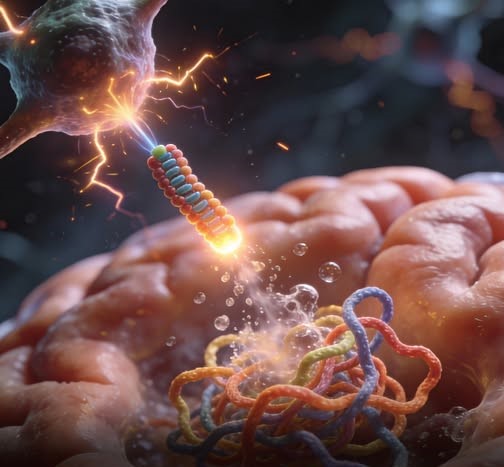
Scientists have made an exciting breakthrough in the search for treatments against Parkinson’s disease. Researchers, primarily from the University of Bath in collaboration with teams at the Universities of Oxford and Bristol, have designed a short, engineered peptide—a small chain of amino acids—that can effectively prevent the harmful misfolding and clumping of alpha-synuclein, the protein most strongly linked to the disease.In Parkinson’s, alpha-synuclein normally exists in a healthy helical shape that helps regulate dopamine release and support normal brain cell function. However, under certain conditions, it misfolds into abnormal forms, sticks together, and builds up into toxic aggregates or fibrils. These clumps damage nerve cells, disrupt communication in the brain (especially in areas controlling movement), cause inflammation, and contribute to the progressive loss of dopamine-producing neurons, leading to tremors, stiffness, slowed movement, and eventually cognitive problems. 
The new peptide acts like a molecular “switch” or stabilizer. It binds to specific regions of alpha-synuclein—particularly in its N-terminal area—and locks the protein into its natural, healthy helical conformation. By doing so, it blocks the early steps of misfolding, stopping the protein from transitioning into toxic oligomers or long fibrils. In lab experiments, this approach “froze” alpha-synuclein before it could form dangerous assemblies, preventing the buildup that harms cells.Key findings from the research include:

  • The peptide is stable, can enter brain-like cells, and shows promising cell-penetrating properties.
  • In a worm model (C. elegans) of Parkinson’s, it reduced toxic protein deposits, restored normal movement, and protected against neurodegeneration.
  • Importantly, it does this without interfering with alpha-synuclein’s healthy functions, such as supporting dopamine signaling.

This strategy differs from many existing approaches, which often try to clear already-formed clumps or reduce overall protein levels. Instead, it targets prevention at the root by stabilizing the protein’s correct shape early on, potentially halting or slowing disease progression before major damage occurs.While the results are highly encouraging, the work remains in the preclinical stage. It has been tested mainly in cell cultures and simple animal models like worms, not yet in mammals or humans. Further studies are needed to confirm safety, optimize delivery (especially getting it across the blood-brain barrier), assess long-term effects, and move toward clinical trials.If successful in humans, this peptide—or similar molecules developed from it—could represent a major step forward, offering a way to slow or even prevent the neurodegenerative cascade in Parkinson’s and possibly related conditions like certain dementias involving alpha-synuclein. The research was published in JACS Au in 2025, highlighting the power of rational peptide design to create compact, drug-like molecules from insights into protein structure.

22 web pages

Related Articles

Leave a Reply

Your email address will not be published. Required fields are marked *

Back to top button