Uncategorized

He Didn’t Scream. He Didn’t Even Raise His Voice. But This One Stare Won Him an Oscar… and Terrified Millions
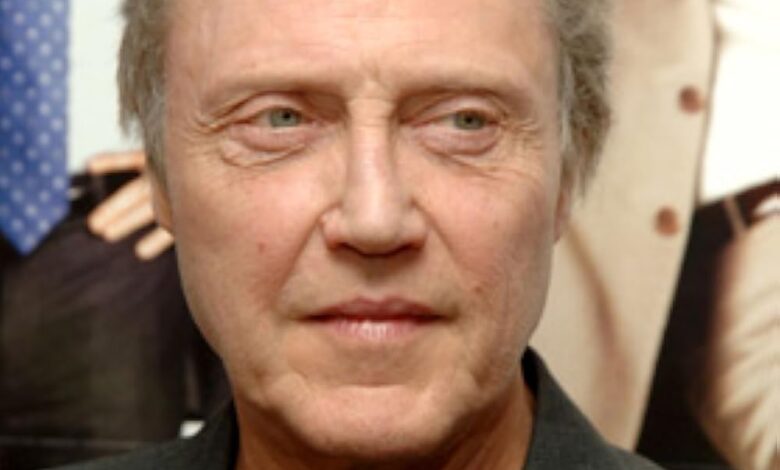
Christopher Walken didn’t need to raise his voice to instill terror. His presence alone could freeze a room, his quiet intensity cutting deeper than any shout ever could.In 1978, deep within the confines of Silvercup Studios in New York City, he stepped into what would become one of the most haunting and unforgettable sequences in cinematic history: the Russian roulette scenes in The Deer Hunter. This wasn’t a moment built on explosive action or dramatic outbursts. It relied on profound stillness, suffocating silence, and an atmosphere so heavy with dread that every breath felt loaded. A simple revolver. One live round in the chamber. A dimly lit space where hope seemed to evaporate with each spin of the cylinder.
Walken approached the role with deliberate restraint. He deliberately maintained emotional and physical distance from his co-stars, especially Robert De Niro, throughout the filming of those pivotal scenes. He avoided casual conversations, rehearsals that might build familiarity, or any sense of camaraderie that could blunt the raw edge of fear and alienation his character embodied. The unease captured on film wasn’t manufactured—it stemmed from genuine discomfort and isolation on set. The prop gun was always handled under strict safety protocols, with no real danger to the actors, but the psychological weight was immense. Walken surrendered to the role in a way that left his performance feeling eerily authentic: hollow-eyed, emotionally vacant, as if his character, Nick, had already slipped away into some irreversible void long before the trigger was ever pulled.When The Deer Hunter premiered in December 1978, much of the critical spotlight landed on De Niro’s powerful lead performance. Yet it was Walken’s chilling, almost otherworldly gaze—the kind that seemed to look straight through you, unreachable and detached—that lodged itself in audiences’ minds. That quiet menace resonated so profoundly that on April 9, 1979, Christopher Walken accepted the Academy Award for Best Supporting Actor, a rare honor for such a subdued and internalized portrayal.
He could have leveraged that Oscar into the predictable path of mainstream stardom—chasing glamorous leading roles, courting the press, building a polished public image. Instead, he did the opposite. Walken has always resisted the Hollywood machine that demands constant visibility and self-promotion. He rarely discusses his craft in detail, preferring to let instinct guide him rather than intellectual dissection. In a 1993 interview with The New York Times, he offered a glimpse into his philosophy: “If you watch yourself, you start acting for the mirror instead of the moment.” True to his word, he has long avoided watching his own films and steers clear of breaking down his performances for public consumption.Rather than pursuing safe, formulaic parts, Walken embraced the eccentric and the unexpected. Over the ensuing decades, he crafted one of the most eclectic, enduring, and genuinely bizarre careers in film history. From memorable turns in Pulp Fiction and True Romance to Catch Me If You Can and countless others, he amassed well over 100 film credits—often juggling multiple projects in a single year. Directors sought him out not for conventional charm or leading-man polish, but for that indefinable quality: an aura of mystery, an unpredictability that made every appearance feel electric and slightly off-kilter.
His enigmatic reputation only grew after the tragic events of 1981, when Natalie Wood drowned during a yacht trip connected to the production of Brainstorm. Walken and Robert Wagner were both aboard at the time. Official investigations cleared Walken of any wrongdoing, but the incident cast a long, lingering shadow over his public image. True to form, he offered no elaborate explanations, no flurry of media appearances to control the narrative. He simply withdrew further, letting silence speak louder than any defense.In an industry where constant exposure is often equated with staying relevant, Walken chose deliberate absence. By the 2000s, this had become an essential part of his persona. He has repeatedly stated that he avoids modern technology—no computers, no cell phones—preferring a life unburdened by constant connectivity. In interviews, including one with The Guardian, he expressed contentment with not being instantly reachable, a stance that stands in stark contrast to Hollywood’s obsession with accessibility and self-branding.Then came 2001, and an unexpected pivot that introduced him to a whole new audience. Director Spike Jonze cast him in the music video for Fatboy Slim’s “Weapon of Choice.” Those familiar only with his intense dramatic roles were stunned to see another side: Walken, who had trained in musical theater and dance back in the 1960s, took center stage. He performed the intricate choreography entirely himself, gliding, spinning, and even levitating through an empty hotel lobby with astonishing grace and control—a surreal display of lightness and joy that contrasted sharply with his darker screen persona. The video swept six MTV Video Music Awards, including Best Choreography, and reframed Walken as a multifaceted talent capable of surprise and delight.
Across his long career, the throughline isn’t danger or chaos—it’s meticulous control. Control over his performances, his privacy, and the stories told about him. Walken never overshares. He never overexplains. He never trades mystery for easy access or fleeting relevance.In a town where fame is typically built on being omnipresent—flooding social media, granting endless interviews, chasing trends—Christopher Walken forged a different kind of power.He cultivated it by staying just slightly out of reach.And in doing so, he proved something timeless: true terror, true magnetism, true artistry doesn’t require volume. Sometimes, the most powerful force is the one delivered in perfect, unnerving silence.