Uncategorized

“The Original Wonder Woman Is Unrecognizable Now — Lynda Carter’s Inspiring Journey from 1970s Icon to 74-Year-Old Legend”
dhe ne gjuhen anglez
Lynda Carter was born on July 24, 1951, in Phoenix, Arizona, into a home shaped by multiple cultures and influences. Her father came from English and Irish roots, while her mother carried Mexican, Spanish, and French heritage. That blend of backgrounds quietly informed the woman she would become—one who never fit neatly into a single category and never tried to.From the beginning, Carter showed an instinctive pull toward performance. As a child, she appeared on local talent shows, comfortable on stage long before she understood what “stardom” meant. By her teens, she was already singing professionally—first with a folk trio called “The Relatives,” then as a solo act in nightclubs and casinos around Arizona and Nevada. Her voice was rich and versatile, capable of moving effortlessly between pop, standards, and country, and she had the kind of natural charisma that made audiences lean in.
In 1972, at age 21, she entered and won the Miss World USA pageant, which sent her to represent the United States at Miss World in London. Although she didn’t take the international crown, the experience opened doors. She moved to Los Angeles, landed small television roles, and caught the eye of producers looking to revive a classic comic-book character for the small screen.In 1975, Lynda Carter was cast as Diana Prince / Wonder Woman in the ABC (later CBS) series Wonder Woman. The show ran from 1975 to 1979 across three seasons and 60 episodes, turning her into an instant global icon. She didn’t just wear the costume—she embodied the character’s strength, compassion, grace, and quiet moral certainty. The iconic spin transformation, the golden lasso of truth, the bullet-deflecting bracelets, the tiara that doubled as a boomerang—all of it became inseparable from her image. Decades later, fans still point to her portrayal as the definitive live-action Wonder Woman, a benchmark that later adaptations (including Gal Gadot’s) openly honor.
Beyond the red-and-blue stars-and-stripes suit, Carter’s performance carried layers of authenticity. She insisted on doing many of her own stunts, trained rigorously in martial arts, and brought a warmth and intelligence to Diana that made the Amazon princess feel human rather than superhuman. Off-camera, she performed the show’s theme song herself, her husky, soulful voice becoming part of the series’ signature sound.After Wonder Woman ended, Carter deliberately stepped away from the relentless pace of network television. She focused on family—marrying businessman Ron Samuels in 1977 (they divorced in 1982) and later finding lasting love with attorney Robert A. Altman in 1984, with whom she had two children, Jessica and James. She continued acting in made-for-TV movies, guest-starred on shows like Superboy, Smallville, and Supergirl, and appeared in films such as Sky High (2005) and Wonder Woman 1984 (2020), where she had a touching cameo as Asteria.
But her most enduring work came outside the spotlight. In the 1990s and 2000s, Carter became a passionate advocate for women’s health after her mother was diagnosed with breast cancer. She channeled that personal experience into public awareness campaigns, serving as a longtime spokesperson for the Susan G. Komen Foundation and other organizations. She also used her platform to speak openly about her own struggles with alcoholism in the 1980s, achieving sobriety and later sharing her journey to help others.Carter never stopped performing. She released several albums over the years—Portraits of Life (1978), At Last (2009), Red, White & Blues (2018)—and toured as a singer, often blending her music with storytelling about her life and career. Her concerts became intimate, heartfelt events where fans could see the woman behind the icon: warm, witty, grounded, and still strikingly beautiful well into her seventies.In recent years, she has embraced her status as a cultural touchstone. She frequently appears at comic conventions, where lines stretch around corners for photos and autographs. Younger generations discovering Wonder Woman for the first time often tell her the show gave them their first image of a powerful female hero. She receives those compliments with genuine humility, often saying, “Diana was always bigger than me—I just tried to do her justice.”
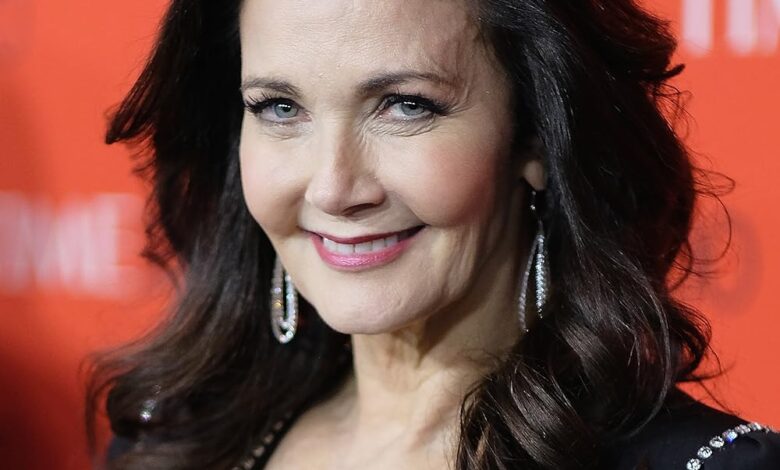
Today, at 74, Lynda Carter remains an enduring symbol of strength, elegance, and authenticity. She has outlasted trends, reboots, and cultural shifts, proving that true icons don’t fade—they simply evolve. From a Phoenix stage to the global stage of superhero mythology, her journey has been one of quiet determination, cultural pride, and unwavering grace.Can you recognize her in this iconic photo? Her journey is truly inspiring.