Uncategorized

Your Gray Hair Isn’t Gone Forever – Science Says It Might Just Be “Stuck” and Ready to Come Back
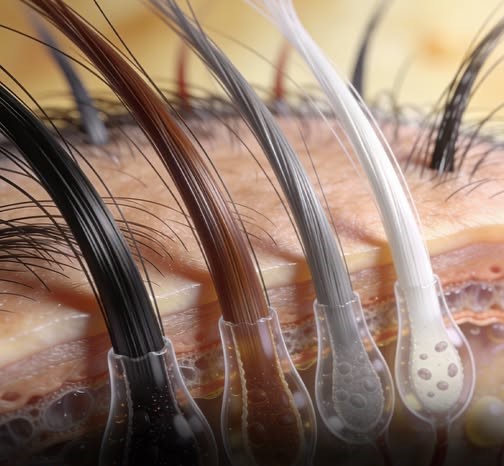
Hair turns gray primarily because the specialized cells responsible for producing color—known as melanocytes or pigment cells—gradually slow down, become less active, or stop functioning altogether. These melanocytes reside in the hair follicle, specifically near the base (in the hair bulb), where they synthesize melanin, the pigment that gives hair its natural shade, whether black, brown, blonde, red, or any variation in between. As a new hair shaft grows from the follicle, melanocytes transfer melanin granules into the growing hair, infusing it with color before it emerges from the scalp.
With advancing age, the reservoir of these pigment-producing cells—and especially their crucial stem cell precursors, called melanocyte stem cells (McSCs)—diminishes over time. The pool shrinks due to natural depletion, reduced renewal, or failure to properly mature and migrate within the follicle’s microscopic compartments. When fewer active melanocytes are available, newly formed hairs receive little to no melanin, resulting in the characteristic gray, silver, or white appearance as the unpigmented keratin becomes visible.
While chronological aging is the most common trigger, premature graying (often before age 30–40, depending on ethnicity) can occur much earlier due to a combination of factors. Genetics play a major role—certain inherited variants influence the timing and rate of melanocyte decline. Chronic or acute psychological stress is another well-documented accelerator: intense stress can trigger massive norepinephrine release from sympathetic nerves surrounding the follicle, forcing melanocyte stem cells to rapidly differentiate and deplete their reserves prematurely, leaving future hair cycles without pigment producers.
Environmental exposures add to the burden. Oxidative stress—caused by an imbalance of free radicals from normal metabolism, UV radiation, pollution, smoking, or poor diet—damages melanocytes and their supportive niche. Hydrogen peroxide buildup inside follicles (a byproduct of melanin synthesis itself) can bleach hair from the inside out if antioxidant defenses weaken. Inflammation, autoimmune conditions (like vitiligo or alopecia areata in some cases), hormonal shifts, and nutritional deficiencies (e.g., in vitamin B12, iron, copper, or ferritin) can further disrupt signaling pathways that keep melanocytes healthy and active.A key player in this process is the hair follicle “niche”—the microenvironment of supporting cells, signals, and structures surrounding the melanocytes. Epithelial cells and other niche components send Wnt, Notch, and other molecular cues that regulate melanocyte behavior, encouraging stem cell mobility, self-renewal, or differentiation into pigment-producing cells. When these supportive signals fade—due to aging, stress-induced damage, or oxidative wear—the niche becomes dysfunctional. Recent groundbreaking research (notably a 2023 Nature study from NYU Langone) has shown that melanocyte stem cells can become “stuck” in the wrong follicle compartment (the bulge area instead of migrating to the germ or bulb region), losing their chameleon-like ability to move and regenerate pigment cells. This immobility prevents them from maturing and contributing to color in new hair growth.
Oxidative stress exacerbates this by harming mitochondrial function in melanocytes, accelerating DNA damage, and promoting cellular senescence. In some individuals, medical issues like thyroid disorders, pernicious anemia, or certain chemotherapy drugs can tip the balance toward earlier or more widespread graying.One of the most intriguing aspects is that graying isn’t always permanent. Documented cases show partial or localized reversal when underlying triggers resolve—such as after reducing severe stress, correcting nutritional deficiencies, or during treatment with certain medications (e.g., some immunotherapies, kinase inhibitors, or anti-inflammatory drugs that unexpectedly repigment hair as a side effect). Studies have mapped individual hairs darkening again in alignment with stress reduction timelines, suggesting that dormant or suppressed melanocyte stem cells can sometimes reactivate if the follicle environment improves—restoring supportive signals, reducing oxidative load, or allowing trapped cells to regain mobility.
However, full-head reversal to youthful color remains extremely rare and is not typical, especially in age-related or advanced graying where stem cell exhaustion becomes irreversible. Emerging research explores promising avenues: antioxidants like luteolin (from certain vegetables) reversed graying in mouse models by combating oxidative damage; exosome therapies and regenerative compounds aim to rejuvenate the niche, reduce inflammation, and protect or mobilize melanocyte stem cells; and strategies to restore McSC movement could one day offer preventive or partial restorative options.Ultimately, while we can’t rewrite our genetic code or stop time entirely, understanding these cellular and environmental mechanisms highlights practical steps to potentially delay onset or slow progression: managing chronic stress through mindfulness or therapy, adopting antioxidant-rich diets, protecting hair from UV and pollution, quitting smoking, ensuring balanced nutrition, and addressing any underlying health conditions promptly. Ongoing science into the melanocyte niche and stem cell dynamics brings realistic hope for future interventions that could help preserve natural hair color longer without drastic biological alterations.