Uncategorized

Trash to Treasure: Watermelon Rind Extract Slashed Kidney Cancer Cells to Just 1/3 in Lab Tests!
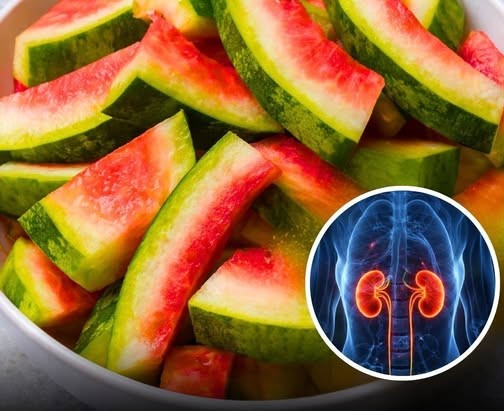
Researchers have turned their attention to an often-overlooked part of the watermelon: the white rind (the pale layer between the green skin and red flesh), typically discarded as waste. In a detailed laboratory study published in the International Journal of Molecular Sciences (2023), scientists extracted bioactive compounds from this rind and tested their effects on human renal cell adenocarcinoma cells (specifically the HRAC-769-P line, a model for kidney cancer).The key finding: after treating these cancer cells with watermelon rind extract (WRE) at a concentration of 88.6 mg/mL, cell proliferation dropped significantly—by more than 34% within just 24 hours compared to untreated controls. By 48 hours, cell viability fell to around 45%, and by 72 hours (three days), it was reduced to approximately 37% of the original levels—meaning the extract cut the surviving cancer cell population to roughly one-third.
This dose-dependent inhibition was linked to several mechanisms observed in the experiments:
- Induction of apoptosis (programmed cell death): Treatments triggered an early and robust activation of poly-caspases (enzymes central to apoptosis), suggesting the extract pushes cancer cells toward self-destruction.
- Reduced cell migration: Wound-healing assays showed markedly decreased movement of cancer cells, hinting at potential anti-metastatic effects.
- Transcriptomic changes: RNA sequencing after 6 hours of exposure (at 44.8 mg/mL) revealed 186 differentially expressed genes—149 upregulated and 37 downregulated—many tied to NF-κB signaling and TNF pathways, which regulate inflammation, survival, and apoptosis. Key genes like BMF, NPTX1, NFKBIA, NFKBIE, and NFKBID were implicated in activating both intrinsic (mitochondrial) and extrinsic apoptotic pathways.
- Other observations: Senescence-associated beta-galactosidase activity remained normal or suppressed, indicating the primary mode of action was apoptosis rather than cellular aging.
The researchers attribute much of this activity to the rind’s rich profile of bioactive compounds. Metabolomic analysis confirmed high levels of citrulline (about 22.29 µg/mg in the extract), alongside various phenolic compounds, hydroxycinnamic acid derivatives, amino acid derivatives, organic acids, and sugar derivatives. Citrulline, in particular, stands out: it serves as a precursor to nitric oxide (NO) production, and elevated NO has been associated with pro-apoptotic effects in certain cancer contexts. Phenolics and other antioxidants likely contribute by modulating oxidative stress, inflammation, and cellular signaling that favor cancer cell survival.Importantly, these promising results come exclusively from in vitro (test-tube/cell culture) experiments on isolated cancer cells. While they demonstrate clear anti-proliferative, pro-apoptotic, and anti-migratory potential, such lab findings do not equate to a proven therapy in living organisms. Factors like bioavailability (how much of the active compounds reach target tissues after digestion), effective dosing in humans, potential toxicity, interactions with normal cells, and long-term impacts remain untested. No animal or human clinical trials have yet validated these effects for kidney cancer treatment or prevention.
Oncologists and researchers stress extreme caution: social media posts or viral claims sometimes exaggerate these preliminary results as a “natural cure” for cancer, but rigorous, large-scale clinical validation through phased human trials is essential before any therapeutic claims can be made. Watermelon rind, like many plant-derived materials, continues to inspire nutraceutical and oncology research due to its abundance of low-cost, natural bioactives—but it is far from a substitute for established cancer treatments.This work highlights the broader value of food waste valorization: turning discarded watermelon rind into a source of potentially useful compounds for health research, while underscoring the critical gap between promising lab data and real-world medical application.Source/Credit: Primary research from “From Fruit Waste to Medical Insight: The Comprehensive Role of Watermelon Rind Extract on Renal Adenocarcinoma Cellular and Transcriptomic Dynamics” (Reddy et al., Int. J. Mol. Sci. 2023, 24(21), 15615; PMC10647773), along with related metabolomic and phytochemical studies on watermelon rind bioactives (e.g., citrulline quantification and phenolic profiles in various publications from 2022–2025).