Big Bang Should Have Left Nothing – LHC Finally Proves Why Matter Won (Mind-Blowing 2025 Discovery)

- A measured asymmetry (difference in decay rates between baryon and antibaryon, normalized) of 2.45% (with ~0.47% uncertainty).
- This differs from zero by 5.2 standard deviations—well above the 5σ threshold for claiming a discovery/observation, ruling out statistical fluke.
- This marks the first confirmed CP violation in baryon decays, extending previous observations (since the 1960s) that were limited to mesons (quark-antiquark pairs).
CP violation—also called “mirror-breaking” or charge-parity symmetry breaking—means the laws of physics treat matter and antimatter slightly differently in certain weak-interaction processes. In the Standard Model, this arises from complex phases in the CKM matrix governing quark mixing.Why this matters for the universe’s existence:
- The Big Bang should have produced equal matter and antimatter, leading to total annihilation and a radiation-filled void.
- Tiny asymmetries allowed a small excess of matter (~1 part in a billion) to survive, forming stars, galaxies, and us.
- While CP violation in mesons (e.g., kaons, B mesons) was known, the Standard Model predicts too little overall asymmetry to explain the observed matter dominance.
- This baryon CP violation adds a crucial new piece—showing the effect exists in three-quark systems—but the measured size (2.45%) is still far too small to fully account for the cosmic matter excess.
- It suggests additional, undiscovered sources (new particles, forces, or physics beyond the Standard Model) likely played a role in tipping the scales during the early universe.
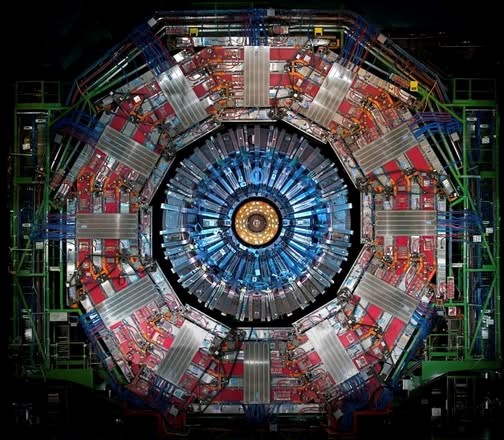
The result builds on LHCb’s expertise in precision flavor physics, using vast LHC datasets to detect these rare, subtle differences. It opens new avenues for testing extensions to the Standard Model and probing the baryogenesis puzzle (how matter won out).For context, visuals often show:
- Diagrams of Λ_b decay paths (tree-level vs. loop amplitudes interfering to produce asymmetry).
- Plots of asymmetry measurements vs. decay parameters.
- Illustrations contrasting matter/antimatter behavior post-Big Bang.
This breakthrough deepens our understanding of why the universe isn’t empty—yet highlights that the full explanation remains elusive, keeping the “why something rather than nothing” mystery alive.