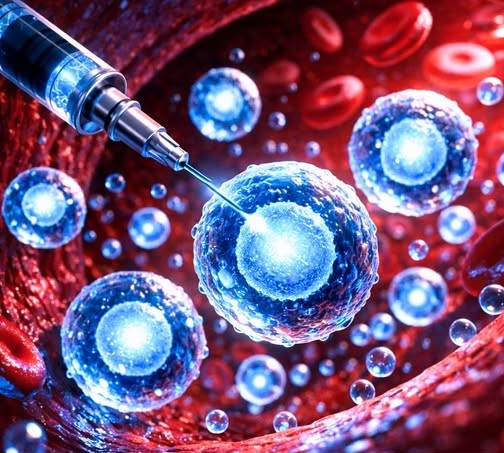
In a groundbreaking world-first achievement reported in late 2024, researchers in China successfully used a 25-year-old woman’s own stem cells to restore her body’s natural insulin production, freeing her from the need for regular insulin injections and marking a major step forward in the fight against Type 1 diabetes.The innovative treatment involved taking adipose (fat) cells from the patient, chemically reprogramming them into induced pluripotent stem cells (iPSCs), and then guiding those cells to differentiate into functional insulin-producing islet-like cells—essentially recreating the pancreatic beta cells that the autoimmune disease had destroyed. These personalized, lab-grown islet cells were transplanted into the woman’s abdominal area (specifically under the anterior rectus sheath), where they successfully engrafted, developed their own blood vessels, and began functioning like native pancreatic tissue.Remarkably, within just 75 days after the procedure, the patient achieved complete insulin independence. Her daily insulin requirements dropped steadily from the start—falling significantly by week two and reaching zero by day 75. Follow-up monitoring showed sustained results: her time spent in the healthy blood glucose target range skyrocketed from about 43% at baseline to over 98% by four months post-transplant, with glycated hemoglobin (HbA1c) levels dropping to a non-diabetic range of around 5%. At the one-year mark, all key clinical endpoints for safety and efficacy were met, with stable glycemic control, no severe hypoglycemia episodes, and no signs of transplant-related complications or abnormal growth.
What makes this case particularly exciting is the autologous nature of the therapy—using the patient’s own cells eliminates the risk of immune rejection that plagues traditional donor islet transplants. This approach sidesteps (or greatly reduces) the need for lifelong immunosuppressive drugs, which carry serious side effects like increased infection risk and organ damage. By regenerating the very cells destroyed by the autoimmune attack, the treatment addresses the root cause of Type 1 diabetes rather than merely managing its symptoms through external insulin.Experts caution that this remains an early, single-patient proof-of-concept from an exploratory phase I trial, not yet a proven cure for widespread use. The immune system’s potential to re-attack the new cells over longer periods, questions about long-term durability (beyond the reported one year), scalability of the cell-reprogramming process, and the need for larger trials to confirm safety and reproducibility are all critical areas still under investigation. Other stem cell approaches (like allogeneic “off-the-shelf” therapies from Vertex or genetically modified cells) are progressing in parallel, with some patients also achieving insulin independence in ongoing studies.Still, this milestone—published in the journal Cell and hailed by outlets like Nature, Scientific American, and others—represents a tangible leap toward regenerative medicine for autoimmune diseases. It fuels optimism that future therapies could one day rebuild insulin-producing capacity in the body, potentially transforming Type 1 diabetes from a lifelong management condition into something far more curable. For millions living with the disease, it offers a powerful glimpse of what personalized cellular medicine might achieve in the coming years.