Uncategorized

The brain doesn’t passively report reality—it actively filters it, deciding what reaches conscious awareness and what stays hidden.
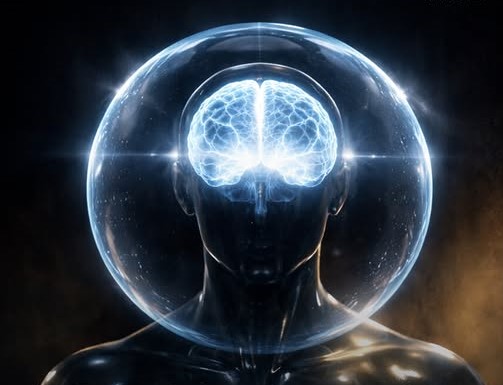
The human brain is not a neutral camera passively recording the world as it is. Instead, it functions as an active, highly selective editor—constantly filtering, prioritizing, and reconstructing reality before any of it ever reaches your conscious awareness.Every second, your senses bombard your brain with an overwhelming flood of data: millions of visual details, countless sounds, subtle changes in pressure, temperature, smells, internal bodily signals, and more. If the brain allowed every single bit of this information into consciousness, the mind would be instantly paralyzed by noise. So the brain makes ruthless decisions about what matters. It amplifies signals that are relevant to survival (a sudden movement in your peripheral vision, a loud unexpected noise, pain, danger cues), while suppressing or completely ignoring vast amounts of “irrelevant” data (the constant pressure of your clothes against your skin, the steady hum of background noise, the subtle movements of your own body). What you perceive as your clear, stable, continuous reality is actually a carefully curated highlight reel, not the raw footage.This principle of selective secrecy extends far beyond perception. Certain parts of the body, most notably the brain and the eyes, are deliberately shielded from the full reach of the immune system. They exist within special zones called immune-privileged sites. In these areas, the usual aggressive immune surveillance is toned down to prevent the immune cells from mistakenly attacking delicate, non-regenerating tissues that cannot easily repair themselves. If the brain were fully exposed to the same inflammatory responses that occur elsewhere in the body, even minor infections or injuries could trigger devastating autoimmune attacks on neurons. So the brain keeps most of its inner workings hidden from the immune spotlight—another form of protective secrecy.The same logic applies to the vast majority of the body’s operations. Heartbeat, digestion, breathing rate, blood pressure adjustments, hormone release, temperature regulation, cellular repair, waste removal—all these critical processes run silently in the background. The brain deliberately excludes them from conscious awareness because constantly monitoring and thinking about them would be exhausting and counterproductive. By keeping these systems automatic and unconscious, the brain frees up precious mental resources for higher-level tasks: planning, problem-solving, social interaction, creativity, and decision-making.This efficiency is no small matter. Although the brain accounts for only about 2% of total body weight, it consumes roughly 20% of the body’s total energy budget at rest—and even more when actively thinking or solving problems. Every calorie spent on unnecessary conscious monitoring would be a waste. The brain therefore evolved to be ruthlessly economical, pushing as much as possible into autopilot so that consciousness can remain focused on what actually helps us survive and thrive in a complex, unpredictable world.What we experience as “reality,” then, is not a direct, objective photograph of the external world or the internal body. It is a sophisticated, dynamic model—a best-guess simulation constructed by the brain to maximize survival, maintain stability, and minimize energy cost. Colors, sounds, the sense of time passing, the feeling of a solid self, the impression of a continuous stream of events—all of these are brain-generated interpretations, not raw truth. The model is optimized for usefulness, not accuracy. It discards details that don’t serve immediate needs, fills in gaps with predictions, smooths over inconsistencies, and presents a coherent, manageable version of the world that allows us to act effectively.In short, the brain is a master of selective secrecy. It hides far more than it reveals—both from the immune system for protection and from consciousness for efficiency. The vivid, stable, meaningful reality you live inside every day is not the world as it truly is; it is the world as your brain has decided you need to see it in order to survive, function, and flourish.