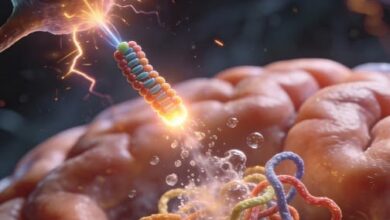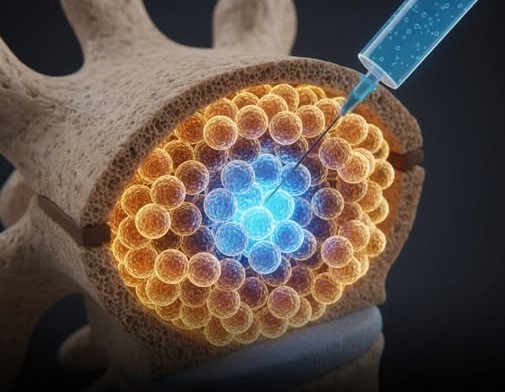
For decades, the medical world treated spinal cord injuries as irreversible tragedies. Once the delicate bundle of nerves connecting brain to body was severed or severely damaged, the prevailing view was clear and grim: there was no meaningful recovery possible. Paralysis below the injury site was considered permanent—a life sentence of dependency, limited mobility, and profound loss of independence. Rehabilitation could help people adapt, but it could not restore what was lost. The spinal cord, unlike many other tissues, was seen as having almost no capacity for true regeneration.Now, that long-held belief is being challenged in a profound way. In a landmark medical achievement, researchers in Japan have achieved what was once thought impossible: for the first time anywhere in the world, a man who was completely paralyzed due to a severe spinal cord injury has regained the ability to walk, thanks to an innovative stem cell-based therapy specifically designed to repair damaged neural pathways.The patient had suffered a catastrophic injury that left him unable to move or feel his legs. He depended entirely on caregivers for even the most basic daily activities. Standard treatments at the time focused solely on stabilization—preventing further damage, managing complications like pressure sores or infections, and providing intensive physical therapy to maintain whatever function remained. None of these approaches could reconnect the broken circuits or regenerate lost nerve tissue.The revolutionary treatment changed that equation. The Japanese team developed a specialized preparation of stem cells—cells engineered or selected to differentiate into supportive glial cells and other nerve-regenerating elements. These cells were carefully transplanted into the injured spinal cord, where they created a more favorable environment for repair. Rather than simply bridging the gap mechanically or replacing lost neurons directly, the stem cells worked by promoting natural healing processes: they reduced inflammation, cleared away inhibitory scar tissue, released growth factors, and encouraged surviving neurons to sprout new connections and axons to regrow across the injury site.The results were extraordinary. After the procedure, the patient slowly began to recover sensation in his legs—first subtle tingles, then more defined touch and position sense. Motor control followed. Over the months that followed, he progressed from minimal voluntary movement to being able to stand with assistance, and eventually to taking independent steps with the aid of a walker or support. What had been dismissed as medically unattainable became a documented reality: he walked again.Doctors and researchers involved described the transformation as nothing short of life-changing. Beyond the physical return of movement, the psychological and emotional impact was immense. Regaining the ability to stand upright, to move through space under one’s own power, restored a sense of agency, dignity, and hope that had been stripped away by paralysis.This single case is still early proof-of-concept, and the treatment remains experimental—available only in carefully controlled research settings, with more patients needed to confirm safety, optimal timing, dosing, and long-term durability. Yet the implications are enormous. Spinal cord injuries affect millions of people worldwide every year, caused by car accidents, falls, sports injuries, violence, or degenerative diseases. For generations, the focus has been on adaptation—wheelchairs, adaptive equipment, caregiver support, and acceptance of permanent limitation. This new approach shifts the paradigm from management to restoration.If further trials continue to show consistent success, stem cell therapies could fundamentally redefine spinal cord injury care. They offer the prospect of partial or even substantial functional recovery for many patients who previously had little hope. Independence could be regained, quality of life dramatically improved, and the massive societal and personal costs of lifelong paralysis reduced.More broadly, this breakthrough highlights the untapped regenerative potential hidden within the human body. It proves that the central nervous system is not as “fixed” and unrepairable as we once believed. With the right biological tools—targeted stem cells, growth factors, anti-scarring agents, and perhaps future gene therapies or neuromodulation—the spinal cord can, to some degree, heal itself.We are witnessing the early dawn of regenerative medicine applied to one of the most challenging areas of neurology. While challenges remain (immune rejection risks, variable patient responses, ethical considerations, scalability, and cost), this Japanese achievement is a genuine turning point. It reminds us that what seems impossible today may become routine tomorrow.The spinal cord, long considered beyond repair, is beginning to reveal its secrets—and with them, a new era of hope for those living with paralysis.