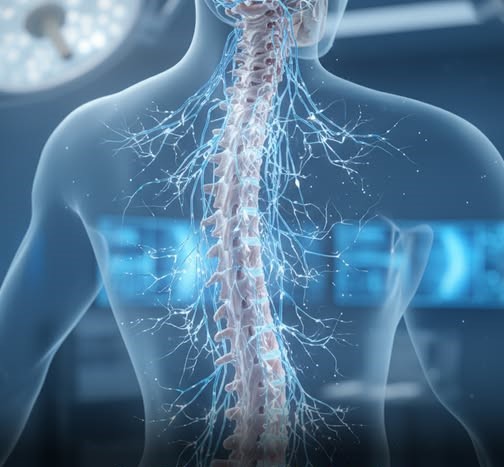
Spinal muscular atrophy (SMA) is a rare, inherited genetic disorder that primarily affects the motor neurons—the specialized nerve cells in the spinal cord and lower part of the brainstem that control voluntary muscle movements.

- Type 0 (very rare and extremely severe): Symptoms begin before birth or in the first few weeks of life, often leading to profound weakness, respiratory failure, and very short life expectancy without intervention.
- Type 1 (also known as Werdnig-Hoffmann disease): The most common and severe form, with symptoms appearing before 6 months of age. Infants typically never sit unsupported, experience severe muscle weakness (especially in the legs and trunk), poor head control, feeding and swallowing difficulties, and life-threatening respiratory problems.
- Type 2: Onset between 6 and 18 months. Children can usually sit independently but never stand or walk unaided. Scoliosis, joint contractures, and respiratory issues are common as the disease progresses.
- Type 3 (Kugelberg-Welander disease): Symptoms start after 18 months, often in early childhood. Individuals can stand and walk independently, though they may lose this ability over time. Weakness is more pronounced in the legs than the arms.
- Type 4 (adult-onset): The mildest form, with symptoms appearing in late adolescence or adulthood. Mobility is usually preserved for many years, and life expectancy is normal or near-normal.
Diagnosis is now typically confirmed through genetic testing that identifies deletions or mutations in SMN1, often combined with SMN2 copy number assessment. Newborn screening programs in many countries now include SMA, allowing for very early detection and intervention.Over the past decade, revolutionary treatments have dramatically changed the outlook for people with SMA:
- Spinraza (nusinersen): An antisense oligonucleotide administered via repeated spinal injections that modifies SMN2 splicing to produce more functional SMN protein.
- Zolgensma (onasemnogene abeparvovec): A one-time gene therapy delivered intravenously that provides a functional copy of the SMN1 gene using an adeno-associated virus (AAV) vector. It is most effective when given in early infancy.
- Evrysdi (risdiplam): An oral daily medication that also enhances SMN2 splicing to increase SMN protein production throughout the body, including in hard-to-reach tissues like the central nervous system.
These therapies, especially when started presymptomatically or very early, can significantly slow disease progression, improve motor function, extend survival, and in some cases allow children to achieve milestones (such as sitting, standing, or walking) that would have been impossible without treatment. Supportive care remains essential and includes regular physical and occupational therapy, respiratory support (such as non-invasive ventilation), nutritional management, orthopedic interventions for scoliosis or contractures, and multidisciplinary monitoring by neurologists, pulmonologists, and other specialists.While SMA remains a lifelong condition with no complete cure, early diagnosis through newborn screening, combined with prompt access to these disease-modifying therapies, has transformed it from a frequently fatal childhood disease into one that is increasingly manageable. Many children and adults with SMA today are living longer, stronger, and more independent lives than ever before, thanks to these scientific breakthroughs and ongoing research into even more advanced treatments.