Uncategorized

Scientists have created an extremely detailed three dimensional map of the adult human brain using artificial intelligence combined with real brain tissue data.
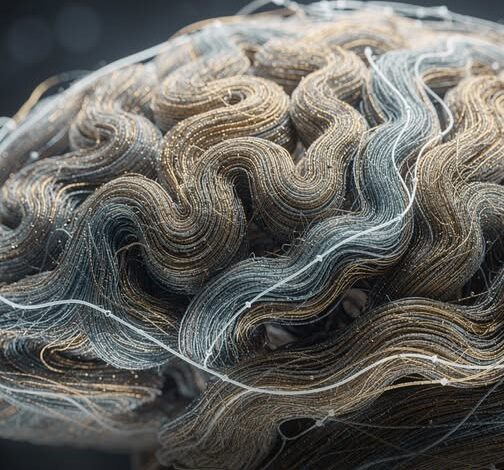
Scientists have achieved a remarkable milestone in neuroscience by constructing an extraordinarily detailed three-dimensional map—or digital atlas—of the adult human brain.
This groundbreaking project combines cutting-edge artificial intelligence with high-resolution data obtained directly from real human brain tissue, resulting in a resource of unprecedented precision and scale
.The creation process began with donated postmortem human brains, which were first subjected to comprehensive MRI scans while still intact.
These non-invasive magnetic resonance images provided a macroscopic structural framework of the entire brain.
Following the initial scanning, the brains were carefully preserved, embedded, and then physically sectioned into many thousands of ultra-thin slices—each measuring just micrometers in thickness. Every single slice was then photographed at microscopic resolution using powerful light microscopes, capturing intricate cellular and subcellular details that conventional MRI technology is simply unable to resolve due to its limited spatial resolution.One of the most challenging aspects of the project was reassembling these thousands of two-dimensional microscopic images back into a coherent, accurate three-dimensional whole that perfectly matched the original MRI reference
. Manually aligning such a massive dataset, while accounting for inevitable distortions, shrinkage, tearing, and other deformations that occur during tissue preparation and slicing, would have been an almost insurmountable task—potentially requiring decades of painstaking human effort
. Here, artificial intelligence played a transformative role.
Advanced machine-learning algorithms were trained to recognize and model the characteristic ways in which brain tissue warps, compresses, and shifts during the histological process.
The AI system then automatically corrected these deformations across every slice, precisely registering each microscopic image back into its anatomically correct position within the overall 3D brain volume derived from the original MRI scan.
This alignment step produced a seamless fusion of macroscopic and microscopic data never before achieved at this level of fidelity.
The resulting digital brain atlas distinguishes and delineates more than 300 distinct, well-defined brain regions—many of which are very small and were previously indistinguishable or lumped together in standard MRI-based parcellations. These newly resolved areas include tiny but functionally critical nuclei, cortical layers, fiber tracts, and other microstructures that play key roles in specific neural circuits. This level of granularity is especially significant because numerous neurological and psychiatric disorders—such as Alzheimer’s disease, Parkinson’s disease, schizophrenia, epilepsy, autism spectrum disorders, and depression—often begin with subtle pathological changes that first appear in highly specific, localized brain regions. Until now, detecting or studying such early, fine-grained alterations in living patients has been extremely difficult.
Thanks to this high-resolution reference atlas, researchers can now computationally project its detailed anatomical boundaries onto routine clinical MRI scans of living individuals.
This non-invasive “virtual dissection” technique allows scientists and clinicians to examine these previously hidden small-scale structures in patients without any surgery or invasive procedures, dramatically enhancing the potential for early diagnosis, precise monitoring of disease progression, and evaluation of treatment effects.
Although the atlas itself is built from adult postmortem donor brains (and therefore reflects a static, averaged adult anatomy rather than dynamic live tissue), its implications are far-reaching.
It provides an invaluable new foundation for studying brain aging, the structural basis of cognitive and emotional functions, the microstructural correlates of behavior, and the biological underpinnings of a wide range of brain disorders. Importantly, the work requires no changes to existing MRI scanning protocols—meaning the atlas can immediately begin enhancing the interpretation of millions of routine brain scans already performed worldwide each year.In summary, this AI-powered, microscopy-guided 3D human brain atlas represents one of the most significant advances in modern neuroscience. It bridges the longstanding gap between the coarse, macroscopic view provided by clinical imaging and the exquisite detail revealed by classical histology, opening exciting new pathways for discovery in brain research, personalized medicine, and our fundamental understanding of the human mind.