Uncategorized

Scientists at the University of Pennsylvania School of Dental Medicine have created an experimental chewing gum made from lablab beans
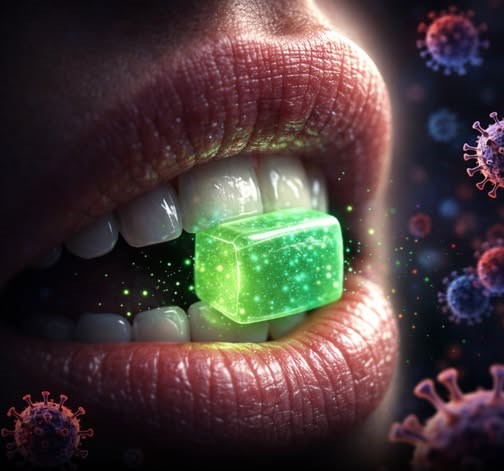
Scientists at the University of Pennsylvania’s School of Dental Medicine have developed an innovative experimental chewing gum derived from lablab beans (scientifically known as Lablab purpureus, also called hyacinth beans).
This gum incorporates a naturally occurring antiviral protein called FRIL (Flt3 Receptor Interacting Lectin), which acts as a “viral trap” by binding directly to certain viruses in the oral cavity, preventing them from infecting cells or spreading further.In detailed laboratory experiments, the research team tested the gum’s effectiveness using saliva samples and in vitro models. The results were striking: when exposed to the protein released from the gum, over 95% of viral particles from several key pathogens were neutralized or trapped. This included strains of influenza A (such as H1N1 and H3N2), both herpes simplex virus types (HSV-1 and HSV-2), and even SARS-CoV-2 (the virus responsible for COVID-19).
The mechanism is straightforward yet elegant—the FRIL protein causes viruses to clump together (self-aggregation), rendering them unable to attach to host cells and reducing their overall load in the mouth. In some tests, just 40 milligrams of the gum formulation (from a standard two-gram tablet) was sufficient to achieve this dramatic reduction in viral titers.This approach targets the mouth as a primary site of viral entry and transmission for many respiratory and oral pathogens.
Oral transmission is often far more efficient than nasal routes for viruses like SARS-CoV-2, influenza, and herpes viruses, making the oral cavity a critical early intervention point.
By neutralizing viruses right where they are shed or initially encountered—during breathing, speaking, coughing, or close contact—the gum could help lower the amount of infectious virus released into the environment, potentially reducing person-to-person spread.
The gum itself is formulated as a clinical-grade product using ground lablab bean powder compressed with standard excipients like gum base, sweeteners (sorbitol, maltitol, xylitol), and natural flavorings to ensure palatability and proper texture—similar to conventional chewing gums. Importantly, the FRIL protein demonstrates remarkable stability: it remains functional in the bean powder for over 683 days and in the finished gum for up to 790–794 days when stored at ambient temperatures, without refrigeration.
Chewing simulations showed efficient release, with more than 50% of the protein delivered within 15 minutes of mastication, ensuring it reaches the sites of infection effectively.Lead researcher Henry Daniell, W.D. Miller Professor at Penn Dental Medicine, and his collaborators (including partners in Finland) emphasize that this chewing gum is not intended to replace established preventive measures such as vaccines, antiviral medications, hand hygiene, or masks. Instead, it represents a complementary, non-invasive tool that could enhance infection control strategies.
It might prove particularly useful in high-risk settings—like crowded public spaces, schools, workplaces, healthcare facilities, or during outbreaks—where reducing viral shedding at the source could make a meaningful difference.
The concept builds on earlier work from the same lab, where a different plant-derived protein (CTB-ACE2) was incorporated into gum to target SARS-CoV-2 specifically, achieving similar >95% reductions and advancing to human clinical trials.While the current findings come from controlled lab-based studies (including plaque reduction assays, ELISA-based quantification, and electron microscopy showing virus clumping), the team notes promising implications for future human testing. The broad-spectrum activity of FRIL—effective against multiple influenza strains, herpes viruses, and coronaviruses—suggests potential against other oral-transmitted pathogens as well.
Challenges ahead include scaling production, conducting rigorous clinical trials to confirm safety and efficacy in people, regulatory approval, and ensuring accessibility and affordability.
This research highlights an exciting frontier in oral health science and preventive medicine: leveraging natural plant-derived compounds delivered through an everyday, user-friendly format like chewing gum to address global infectious disease challenges. If further validated, such innovations could offer a simple, low-cost addition to the toolkit for controlling viral transmission, especially in resource-limited settings or during emerging outbreaks.
The study was published in Molecular Therapy (DOI: 10.1016/j.ymthe.2024.12.008; PMID: 39663701; PMCID: PMC11764783), underscoring the growing role of plant-based biotechnology in modern therapeutics.
24 web pages