The Life of a Dedicated Botanist
Harriet Whitmore, born 1882 in Edinburgh, Scotland, trained in botany at the University of Edinburgh. She came from an upper-middle-class family, the youngest daughter of a merchant father and a mother skilled in embroidery. Harriet maintained a disciplined schedule: cataloging plants, recording growth patterns, and crossbreeding species in the conservatory.
Her temperament was meticulous and patient, with careful notes written in a precise, looping hand. Soil-stained gloves, faded lab coats, and pressed flowers pinned to journals reveal her lifelong devotion to botanical observation and experimentation.
Conservatory as a Repository of Knowledge
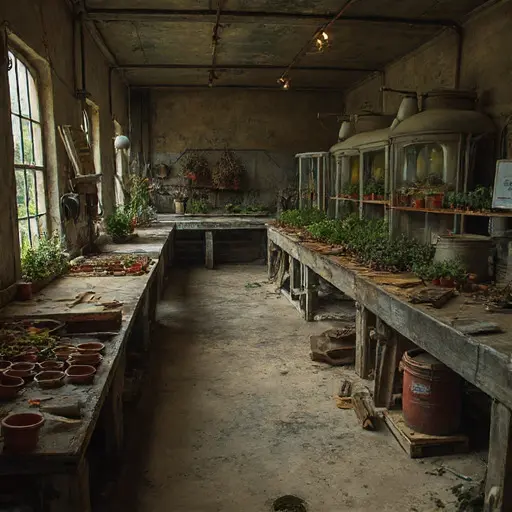
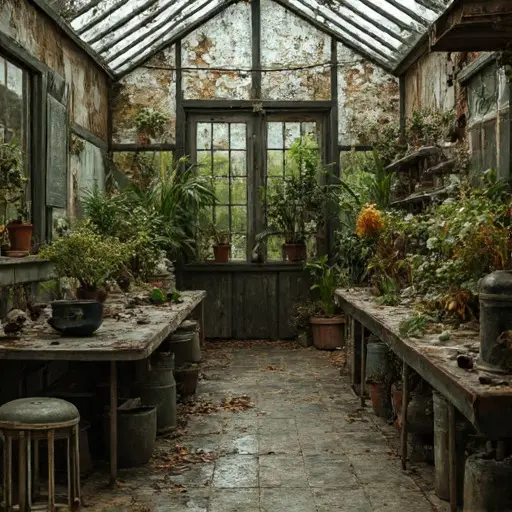
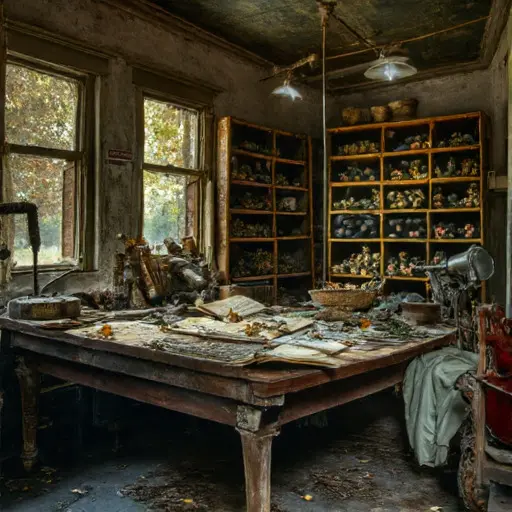
The primary conservatory is densely filled with fern-filled terrariums, glass vases of preserved flowers, and workbenches strewn with gardening tools. Botanical notebooks sit open, pages annotated with botany observations. Soil-stained trays, clay pots, and empty glass jars are scattered, frozen mid-experiment. Dust and cobwebs coat the surfaces. The room conveys absence through halted cultivation, meticulous routines interrupted, and the quiet preservation of plant life left unattended.
Decline from Personal Loss
Harriet’s decline began after the death of her father and the loss of family funding. Unable to maintain the conservatory or procure rare specimens, she withdrew into her private study. Projects were left incomplete, greenhouses fell into decay, and her detailed notes remained unorganized. The carefully maintained routines of botany became impossible to sustain, leaving the interior suspended in quiet abandonment.
Evidence of Interrupted Passion
Pressed flowers, glass vials, pruning tools, seed packets, and handwritten journals linger as traces of Harriet’s labor. The conservatory and herbarium preserve the intensity of her professional focus, silently marking a life interrupted by grief and financial limitation, leaving no resolution beyond lingering absence.